


How Financial Abuse Relates to Gambling: What You Need to Know
Financial abuse in the context of gambling is defined as the use of gambling behaviors to control, exploit, or manipulate another person's financial resources, creating economic harm that can range from hidden debt to complete financial devastation. Understanding how financial abuse relates to gambling matters because the two are deeply intertwined in ways most support systems still fail to recognize. A 2026 Durham University study found that gambling harm co-occurs with economic abuse through shared financial events, yet the abuse dimension is frequently overlooked. Whether you are living with a partner whose gambling is draining your household, or you are using gambling yourself to cope with an abusive situation, this guide will help you name what is happening and find a way forward.
How gambling behaviors drive financial abuse
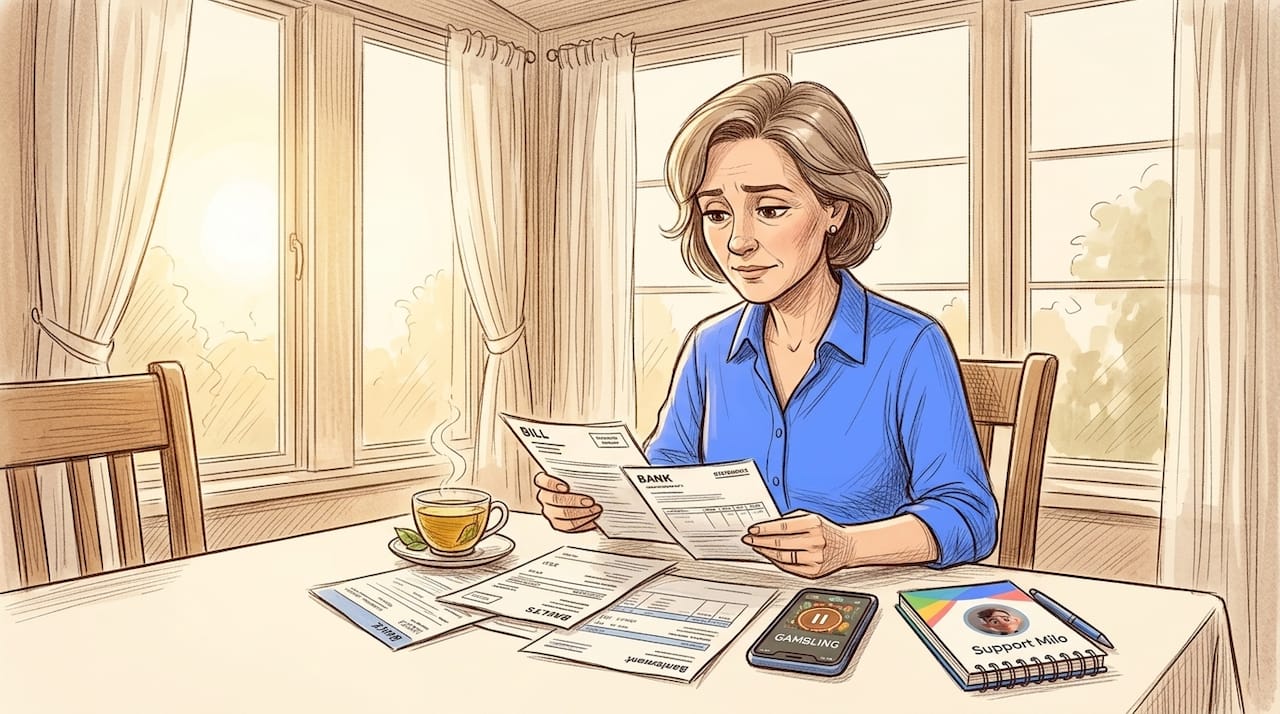
Gambling and financial abuse share a common engine: control. When gambling enters a relationship, it rarely stays contained to one person's wallet. The impact of gambling on finances extends to rent arrears, eviction, and long-term housing instability, turning what looks like a personal habit into a household crisis.
The mechanics work in a predictable pattern:
-
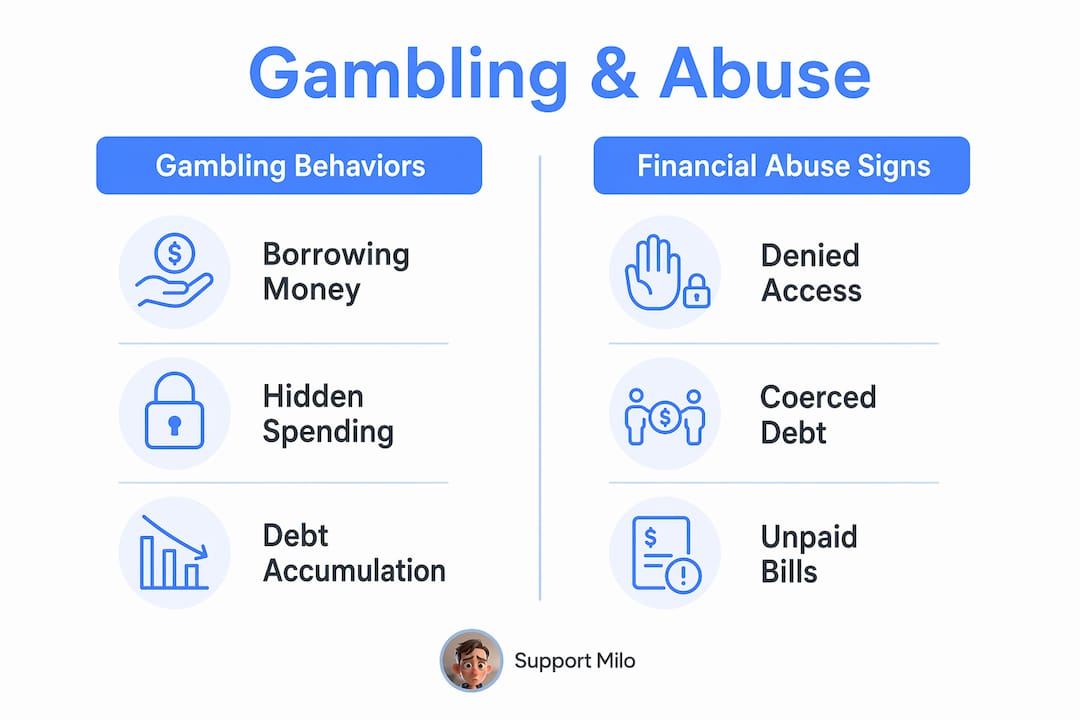
Debt accumulates silently. A person with a gambling problem borrows from household accounts, credit cards, or family members without disclosure. The coerced debt in abusive marriages averaged 4.4 accounts per person, totaling over $12.5 million across study participants. That figure shows how quickly individual borrowing becomes a structural financial trap for everyone in the household.
-
Coercion replaces conversation. Abusers may pressure partners into opening new loan accounts or signing for credit they did not want. According to Respect Victoria, financial abuse includes forcing unwanted loans and redirecting money meant for essentials like rent directly to gambling.
-
The borrow-to-gamble cycle locks in. The Money and Mental Health Policy Institute reports that 49% of respondents said gambling and borrowing directly influenced each other. People borrow to gamble, then gamble to repay the borrowing. Each loop tightens economic control and deepens debt.
-
Frequency multiplies risk. A BMC Public Health study found that weekly gambling increases the odds of loan repayment difficulties by 2.4 times. Online gambling at age 20 was linked to 1.8 times higher odds of financial stress. More frequent gambling does not just mean more money lost. It means a faster slide into the kind of debt that destabilizes entire families.
Pro Tip: If you notice that household bills are going unpaid while your partner insists finances are "fine," that gap between words and reality is worth documenting. Keep screenshots of account balances and payment records in a secure location only you can access.
Understanding the family financial impact of gambling addiction helps you see that this is not about one bad month. It is a pattern with a name.
Recognizing signs of gambling-related financial abuse
Spotting financial abuse linked to gambling can feel confusing, especially when you love the person involved. The GOV.UK Economic Abuse Toolkit defines economic abuse as primarily about controlling access to money and resources, not just excessive spending. That reframe is powerful. It means the abuse is about power, not just poor financial decisions.
Watch for these warning signs:
- Restricted access to shared accounts. You are removed from joint accounts, denied information about balances, or told you "don't need to worry" about money.
- Household funds redirected to gambling. Rent, utility payments, or grocery money disappears and you later discover it was used for bets or online gaming platforms.
- Hidden gambling debts. You discover credit cards, payday loans, or personal loans you did not know existed. Loved ones hiding gambling debts is one of the most common early warning signs.
- Unusual credit activity. New accounts appear on your credit report that you did not open, or your credit score drops without explanation.
- Emotional manipulation tied to money. Guilt, shame, or threats are used to prevent you from asking questions about finances or seeking outside help.
"Economic abuse is about control of money access rather than just excessive spending." — GOV.UK Economic Abuse Toolkit
That distinction matters enormously. If you have been telling yourself "they just have a spending problem," this reframe may help you see the situation more clearly. Financial manipulation in gambling contexts is a form of coercive control, and you deserve support in recognizing it.
Why gambling becomes a coping tool amid financial abuse
Here is something that surprises many people: gambling is not always something the abuser does. Sometimes, the person experiencing abuse turns to gambling themselves. Dr. Mercy Denedo's 2026 research at Durham University identifies a bi-directional relationship, where gambling can be both a driver of domestic abuse and a coping mechanism for victims.
When someone is living under financial control, gambling can feel like the only space where they have agency. The possibility of a win represents escape. The dopamine release from placing a bet offers brief relief from chronic stress and helplessness. This is not weakness. It is a predictable neurological response to an unbearable situation.
The problem is that this coping path deepens the financial harm. A person already in a controlled financial situation who begins gambling to cope now faces two sources of economic damage: the abuser's control and their own growing losses. The effects of gambling on relationships compound quickly when both parties are caught in gambling-related behaviors, even for entirely different reasons.
Addressing emotional recovery is not separate from addressing financial recovery. They are the same process. Learning how to cope with gambling family stress is a real and necessary step, not a luxury.
Pro Tip: If you find yourself gambling to feel a sense of control or hope, that pattern is worth sharing with a counselor who understands both addiction and abuse. Naming the "why" behind the behavior is the first step toward changing it.
Strategies for breaking the cycle of gambling-related financial abuse
Recovery from gambling-related financial abuse requires action on two fronts at once: the financial and the emotional. Reactive, short-term fixes without addressing the underlying control dynamic or gambling triggers perpetuate the harm rather than ending it. Here is a practical framework to start moving forward.
Understanding your debt: coerced vs. gambler-initiated
Not all debt in these situations is the same. Distinguishing coerced debt from gambler-initiated debt involves analyzing who authorized the account and who benefited from it. This distinction matters for legal recourse and debt relief options.
| Debt type | Key characteristics |
|---|---|
| Coerced debt | Opened in your name without genuine consent; you received no benefit from the funds |
| Gambler-initiated debt | Opened by the person gambling; may include joint accounts drained without permission |
| Shared household debt | Legitimate joint debt now burdened by gambling losses; may require mediation |
Steps you can take right now
-
Document everything. Record dates, amounts, and incidents where financial access was restricted or funds were redirected. Screenshots, bank statements, and written notes all count as evidence. Documentation of financial access control is a powerful tool for accessing legal and support services.
-
Separate your credit. Contact your bank to understand what accounts are in your name and request a free credit report from Equifax, Experian, or TransUnion to check for unauthorized accounts.
-
Seek specialist support. A financial counselor who understands coercive control can help you build a recovery plan. Organizations like the National Domestic Violence Hotline (1-800-799-7233) connect survivors to financial advocates.
-
Address housing risk early. If rent arrears have built up due to gambling-related diversion of funds, contact your landlord and a housing counselor before eviction proceedings begin. Early communication creates more options.
-
Build financial independence gradually. Open a personal account in your name only. Start with small, regular deposits. Financial independence is not built overnight, but every step counts. Learning how to manage shared debt from gambling is a skill you can develop with the right guidance.
Key takeaways
Financial abuse and gambling are linked through coercive control, debt accumulation, and emotional coping patterns that require both financial and psychological support to address.
| Point | Details |
|---|---|
| Gambling drives financial abuse | Borrowing to gamble and gambling to repay creates a debt cycle that tightens economic control over partners. |
| Economic abuse is about control | Restricting access to money, not just overspending, is the defining feature of gambling-related financial abuse. |
| Victims may also gamble to cope | The relationship is bi-directional; survivors sometimes turn to gambling as a way to reclaim a sense of agency. |
| Coerced debt has legal implications | Debt opened in your name without consent may be challengeable; documenting authorization is critical. |
| Recovery needs both dimensions | Addressing only finances or only emotions leaves the cycle incomplete; integrated support produces lasting change. |
Why this connection is still being missed, and what that costs survivors
I have spent a lot of time in conversations with people who were told their situation was "just a debt problem" or "just a gambling problem." The word "just" does enormous damage. It strips away the coercive context and leaves survivors trying to solve a financial crisis without anyone acknowledging the power dynamic underneath it.
What Dr. Mercy Denedo's 2026 research confirms is something many survivors already knew in their gut: gambling harm and economic abuse are not parallel tracks. They are the same track. The abuser who gambles away rent money and the partner who hides credit card statements are both participating in a system of financial control, even if their motivations look different on the surface.
The part that troubles me most is how rarely housing services, debt counselors, or even domestic abuse organizations screen for gambling. A person presenting with rent arrears and mounting debt may be living inside a coercive control situation, but if no one asks about gambling, the root cause stays invisible. Screening for gambling in housing and support services is not optional. It is a gap that costs people their homes and their safety.
The good news is that awareness is growing. Trauma-informed financial counseling is becoming more available. Platforms like Support-milo are creating spaces where people can share their stories without shame and track their progress with community support. That kind of visibility, where your debt number is not a secret but a shared challenge, changes the emotional weight of recovery.
If you are reading this and recognizing your own situation, please know: the shame you feel is not yours to carry. The system failed to name what was happening to you. Now you can name it yourself, and that changes everything.
— Milo
You do not have to face this alone
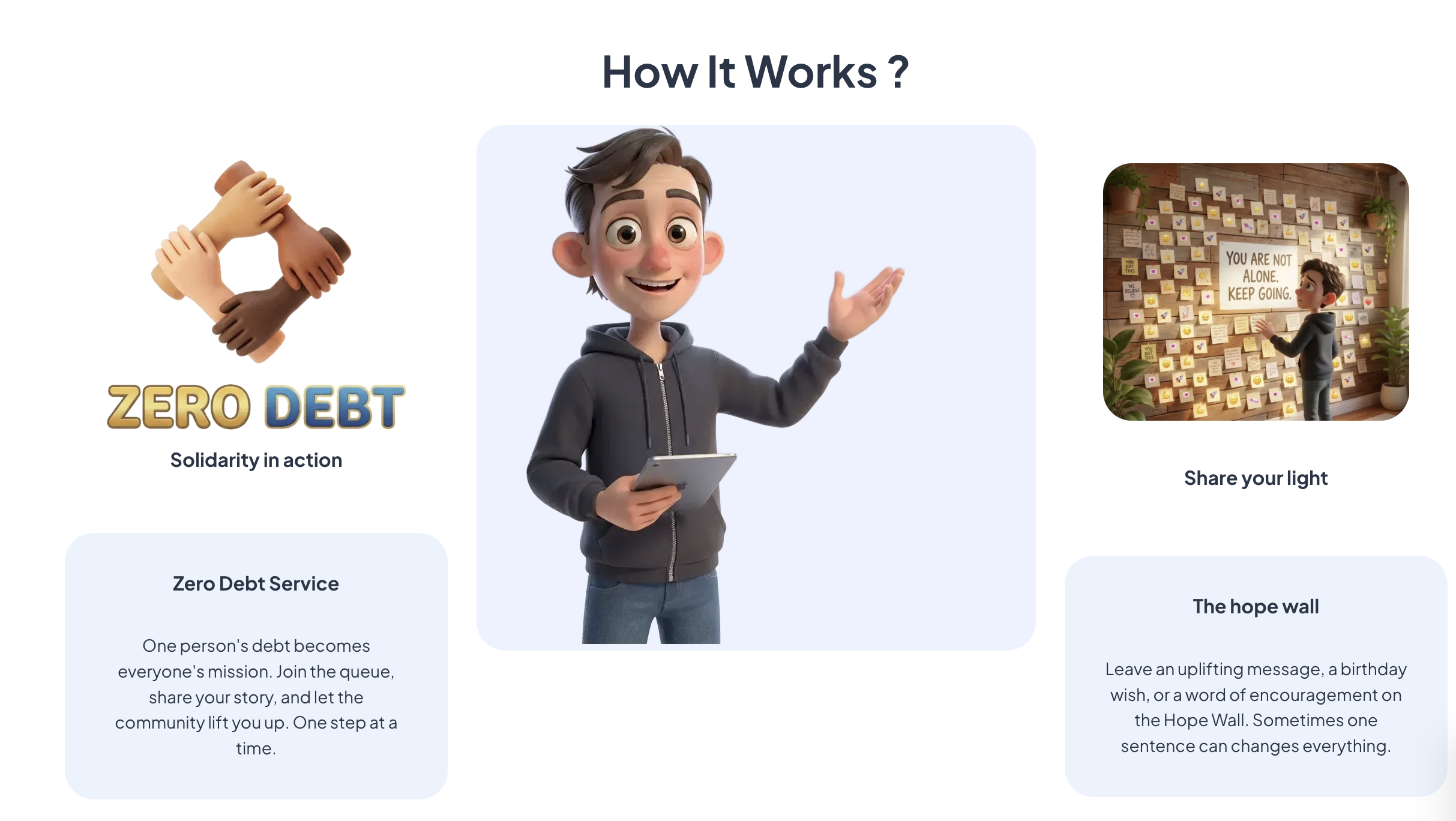
Support-milo is a community-driven platform built for people navigating gambling addiction and the financial harm it causes. Whether you are overcoming gambling addiction yourself or supporting someone you love, Support-milo offers debt tracking tools, a Hope Wall filled with real encouragement, and a community of people who genuinely understand what you are going through. You can share your story, follow your progress, and feel the difference that collective support makes. Visit the Support-milo platform to explore tailored programs, or check out the zero debt support page if you are ready to start clearing gambling-related debt with a plan behind you. Recovery is not a solo effort.
FAQ
What is the connection between financial abuse and gambling?
Financial abuse related to gambling occurs when gambling behaviors are used to control, exploit, or restrict another person's access to money and resources. This includes hiding debts, coercing partners into loans, and redirecting household funds to gambling.
How do I know if I am experiencing gambling-related financial abuse?
Key signs include being denied access to joint accounts, discovering unknown debts in your name, and having household bills go unpaid while money is spent on gambling. The GOV.UK Economic Abuse Toolkit defines this as coercive control over financial resources, not just poor money management.
Can victims of financial abuse also develop gambling problems?
Yes. Research by Dr. Mercy Denedo at Durham University identifies a bi-directional relationship where victims may turn to gambling as a coping mechanism for the stress and helplessness caused by abuse.
What should I do first if I suspect coerced debt?
Pull your credit report from Equifax, Experian, or TransUnion and look for accounts you did not open. Document any evidence of restricted financial access and contact a financial counselor who specializes in coercive control situations.
Where can I find support for gambling-related financial abuse?
Support-milo offers community-based debt tracking and emotional support for people affected by gambling harm. The National Domestic Violence Hotline (1-800-799-7233) also connects survivors to financial advocates who understand the overlap between gambling and economic abuse.